
The deluge of offerings in the primary market, a muted results season and increasing talks of a Fed taper may quicken the pace of overseas investors selling Indian equities in the near term. The next few weeks may see a dozen companies tap the market for initial public offerings and raise about Rs 30,000 crore. These include the likes of Zomato, Glenmark Life Sciences, Utkarsh Small Finance Bank and Seven Islands Shipping.

'Q1 is going to bear the brunt of the second wave, exposing full-year GDP forecasts to downward revisions, unless phase-3 of vaccination is executed quickly.'


'As valuations of large-caps appeared to be out of whack, investors started lapping up quality mid-caps and small-caps, which were available at relatively comfortable valuations.'

High inflation print is the price that the Reserve Bank of India (RBI) will have to pay to nurse a fragile growth back, say economists. Wholesale Price Index-based inflation rose to a record high of 12.94 per cent in May, aided by low base effect, but also because of higher fuel and commodity prices. Retail inflation, too, surprised by rising to 6.30 per cent, while the core inflation, which is the non-food and non-fuel component, rose to an 83-month high of 6.55 per cent. These numbers are much above RBI's upper limit of 6 per cent inflation target, but there is very little that the RBI can do at this moment.

'While the country has been hit hard from a strong second wave of Covid, we believe the markets are willing to look through that.'

The Securities and Exchange Board of India (Sebi) has deferred the diktat requiring foreign investors to disclose their mobile number, email addresses and income details to depositories, a move believed to be aimed at curbing practices such as round tripping and money laundering. "Based on the representations received from MIIs (market infrastructure institutions), Sebi has decided to extend the deadline for making 6-KYC attributes mandatory for new accounts opened by 1 month to July 1, 2021. "Participants are accordingly requested to take note of the above and ensure compliance," NSDL said in a note on Tuesday. The regulator is also meeting custodians this week to thrash out a solution and address investors' concerns.

'It is critical that the Covid curve does not have a fat tail and the chain is broken quickly.'
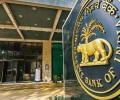
The Reserve Bank of India (RBI) booked massive gains on its foreign currency sales and needed to provide much lesser for its reserves in 2020-21 (FY21), helping it to carve out a significant Rs 99,122-crore dividend for the government, revealed the RBI's annual report for FY21. By doing so, the central bank's risk buffers have reduced to the bare minimum, which may restrict some of RBI's scale of operations, and would likely hamper dividend payout for financial year 2021-22, said analysts. The annual accounts are for nine months ended March 31, 2021 since the RBI changed its accounting year from July-June to April-March from FY21.

Those hardest hit by the second wave of the pandemic have been blue-collared workers, doctors and healthcare workers, law and order and municipal personnel, individuals eking out daily livelihood, and small businesses. And there should be more measures taken to alleviate their pain, the Reserve Bank of India (RBI) said on Monday. The report also indicated that the RBI's growth numbers might have to be revisited as the central bank's real GDP growth projection of 26.2 per cent given in the MPC's resolution of April 7 for the first quarter of 2021-22, were "made before the full fury of the resurgence." Nevertheless, the "resurgence of COVID-19 has dented but not debilitated economic activity in the first half of Q1: 2021-22.
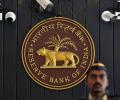
The Reserve Bank of India (RBI) is precariously balancing two opposing objectives - maintaining easy financial condition in the domestic market, while ensuring external stability - and economists have started taking note. They say India is going through the classic trilemma of the 'Impossible Trinity'. The RBI cannot have an independent monetary policy (setting domestic interest rates) in an environment of an open capital account and flexible exchange rates. What is even more complicated for the central bank now is that financial market stability overlays all the other three objectives.

Top officials said asking employees other than the fund management team to mandatorily invest a fifth of their salary goes against the principle of natural justice.

Industry players estimate the average payouts to be in the range of 50-75 per cent of the bankers' annual salaries. For the top performers, the bonuses could be 100-125 per cent.

Theoretically, the currency with the public should expand in sync with the nominal income, which again moves in relation to the nominal growth rate of the economy. But the correlation breaks easily when other factors come into play, says Anup Roy.

Operational and compliance challenges foreseen for fund houses in deducting tax at source, resulting in possible TDS mismatches and disputes with investors.

Covid-19, US yields, dollar to weigh on equity flows in the near term.

The Nifty Bank index has come off 15 per cent from its peak in February, underperforming the benchmark Nifty which is down 6%.

Debt funds typically held 0-5 per cent of their portfolio in cash and cash equivalents before this Sebi diktat.

Although such alerts are not compulsory for the banks, this may become the norm now if payments are missed even for a day.

The SME segment has been grappling with lack of liquidity and lacklustre institutional participation.
 © 2026 Rediff.com - Investor Information - Advertise with us - Disclaimer - Privacy Policy - Sitemap - Feedback - About us - Terms of use - Grievances